Throughout the last several years, it appears that Sophie Cunningham has been a magnet for controversy. Whether it was lascivious allegations involving her and an executive at the Phoenix Mercury and Suns or a gesture that she did that went viral, it appears that wherever she goes, the cameras follow.
Cunningham has also been anything but shy on revealing where she stands politically. She is definitely well right of center and that certainly has her in the minority in the overall political landscape of the WNBA which she is part of.
Those that may not have known before are certainly getting a reminder that Cunningham is on the other side of the political aisle considering comments she has made about the state of transgender athletes and their ability to compete in athletics.
There is empirical evidence that proves that this transphobia that has engulfed sports is overblown. The percentage of athletes that actually are transgender is an extremely small fraction according to NCAA statistics. In addition, Cunningham’s stance is actually in line with various entities – including several U.S. states and even the International Olympic Committee – which moved forward with transgender bans.
This has to be discussed from a variety of angles. Firstly – from the perspective of Cunningham, it appears obvious to anyone paying attention that she is clearly setting herself up to be a right-wing influencer once she retires from professional basketball.
After all, being a right-wing social media influencer has been proven to be extremely financially lucrative – even if some on that side of the aisle really do not believe a word of what they say and are only doing so to keep a roof over their heads and their families well-fed.
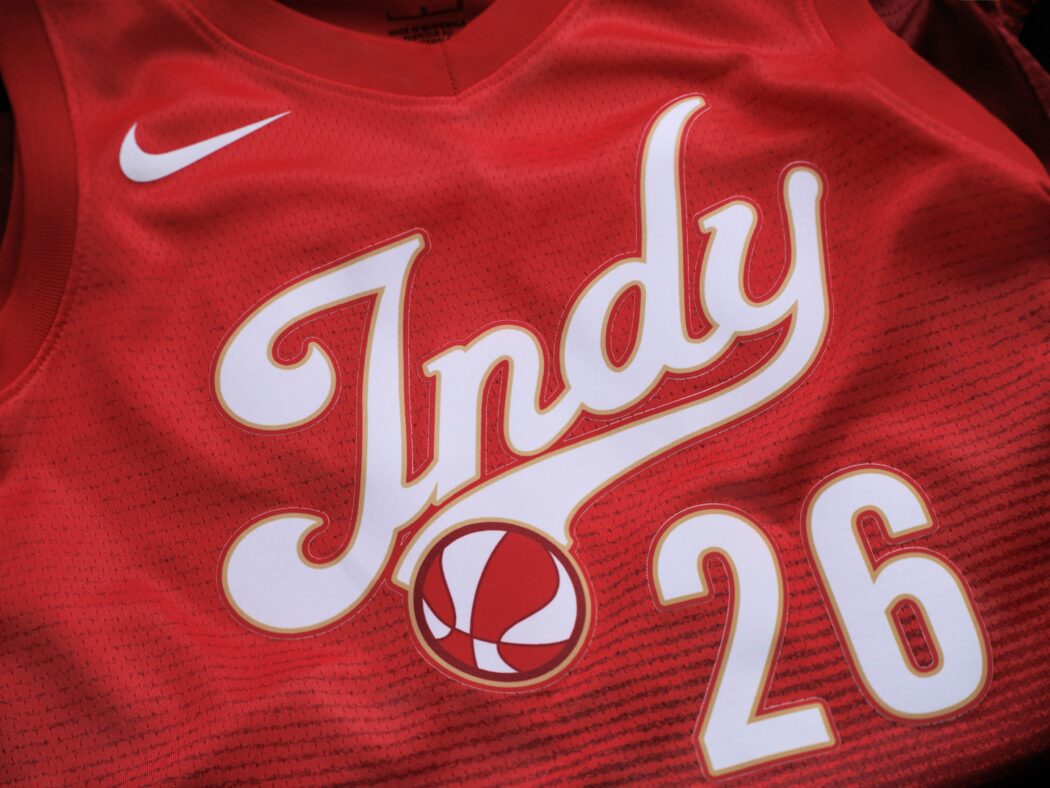
Currently, Cunningham is on a one-year contract with the Indiana Fever. She has become so radioactive that any team that decides to sign her is taking a massive public relations risk with, seemingly, very little on-court reward. Cunningham’s politics may be more in line with the type of “fan” today’s WNBA is looking to attract, but it flies in the face of the more entrenched W fan – one who is generally more left of center.
Cunningham will also be 30 years old this month. It is very unlikely that she encounters a Kahleah Copper-esque career arc where she becomes a perennial All-Star years after treading water for most of her career. At this point, this is what Cunningham is – someone who can give a team minutes off a bench but is unlikely to be a regular in a starting five.
She also understands that much of this is a byproduct of the Caitlin Clark effect. Even though most of these “new fans” have had numerous problematic moments that they claim to be in Clark’s name, Clark herself has not thrown them the red meat that Cunningham has.
In fact, this is another element of where Cunningham could be on the verge of undergoing a life arc. Clark has a brand to protect, so she may not necessarily do anything too radioactive because she is swimming in endorsement money (State Farm, Wilson, Gatorade, Nike, etc.) and is well-protected from a public relations standpoint.
Clark clearly wants her brand to be centered around basketball even if her fans want to use her as an avatar to humble the Black women of the WNBA. Cunningham has no such issues with brand protection because it is not as if she will be remembered as one of the greatest players in WNBA history.
Cunningham is clearly utilizing Clark’s fanbase in an effort to segue into her next act as a right-wing influencer. Let us be honest, if Cunningham was putting up the numbers that Clark does on a game-by-game basis, many of these same provocateurs would be referring to Cunningham as the “face of the WNBA.”
For some of these provocateurs, one can make a case to say going from Clark to Cunningham may be a bit of a downgrade. After all, the Indiana Fever recently played road games at the Seattle Storm, Portland Fire and Minnesota Lynx. Seattle, Portland and the Twin Cities are three of the most progressive locales in the country. Rallies were held in support of Cunningham. And while said rallies did garner some media attention, that would have been a different story if those comments came from Clark’s mouth instead of Cunningham’s.
Many of them wanted Clark to be the anti-woke warrior Cunningham is and Clark has not given them much – other than attending a Morgan Wallen concert.
Outside of that, the reality of Clark is that she was influenced to pursue a career in basketball because of a Black woman in Maya Moore and she acknowledged how the W was built by Black women in an interview with Time Magazine. Clark also liked an Instagram post from Taylor Swift in 2024 when she endorsed Vice President Kamala Harris’ presidential bid and she recently took photos with President Barack Obama at All-Star practice at the Obama Presidential Center.
Cunningham is who these individuals want Clark to be – but Cunningham simply is not the caliber of basketball player that Clark is. Clark checks more of the basketball boxes that make her attractive to such an audience. Cunningham checks almost all of their social boxes – which matter more to that crowd.
Does one notice that being “pro-woman” is a popular line among those who want to exclude transgender individuals from – not only sports – but society as a whole? These individuals claim to be feminists, but true feminism is intersectional.
Right-wing provocateurs understand that the data is not on their side – but a popular belief on their side is that women’s sports are teeming with transgender individuals solely because many women athletes do not have the “look” of a woman.
Someone needs to tell Cunningham that women who are not transgender are subject to being labeled as trans if they do not exude a hegemonically “feminine” look. Brittney Griner and Lauren Betts are textbook examples of this. In fact, tall women across the board receive this flack and the WNBA is full of tall women.
In short – being anti-trans is one of the biggest examples of being anti-woman because it puts pressure on women to have to adhere to beauty standards (many of which are set by men who do not even like women, emotionally) as opposed to being their true selves.
And if being a supposed warrior on behalf of women’s sports (and women in general) is Cunningham’s aim, that is very short-sighted too. As we have pointed out on several occasions, the biggest threat to women’s sports is not the trans community – it is misogynistic men.
Cunningham needs to look at herself in the mirror because when she was getting increased media attention for the pointing gesture (a gesture which even the WNBPA has warned brands against profiting off of), she turned that into an opportunity to be a “ring girl” for a mixed martial arts fight involving Conor McGregor.
McGregor lost the UFC fight in the first round, but he was found liable for sexual assault in 2024 and the victim had to be paid a grand total of $257,000. The victim also needed surgery to remove a tampon because the act that was alleged to have taken place was that bad.
Women need more protection from the McGregors of the world than they need protection from trans individuals or drag queens, but history has shown that the anti-trans movement often protects men like McGregor.
Also, as Brianna Turner has astutely pointed out, the aims of many of these hardcore right-wing provocateurs is only beginning with wanting to exclude transgender individuals from sports.
The endgame of many of these people is to do away with women’s sports entirely. Turner cited text from the Heritage Foundation’s Project 2025 initiative which believes that women’s athletic opportunities actually take away from men’s athletic opportunities and that women playing sports make them less likely to have children.
Cunningham, Riley Gaines, Martina Navratilova and others have taken the same anti-trans stance which has an endgame of forcing women off the field of play and back inside the household to be baby factories for men who may not even be truly in love with them.
But this is not a new thing – right-wing provocateurs have long-believed that women should remain on the sidelines. They have believed for eons that only lesbian women play sports and that heterosexual women do not.
In the eyes of these provocateurs, women are supposed to be short, petite and have long-flowing bleach-blonde hair. Anything outside of that gender norm means that individual must be a lesbian or trans in their eyes. We mentioned Clark at the Obama Presidential Center recently at All-Star weekend – how many times have right-wing provocateurs maliciously misgendered Michelle Obama as a man?
As for Title IX, it was once branded as the “Lesbians’ Bill of Rights” by officials in the Reagan administration. The Heritage Foundation wants to do away with Title IX.
Cunningham coming out as so virulently anti-trans is nothing but a self-own at the end of the day. It is one thing to limit – or entirely take away – athletic opportunities for transgender athletes. Cunningham and others will eventually have to confront the reality that these same right-wing forces want to limit athletic opportunities for women across the board – and that it began with attacks on the transgender community.
How has the WNBA responded to this? Cunningham is fortunate that this did not really garner that much attention until after All-Star weekend in Chicago or commissioner Cathy Engelbert may have mentioned it in her State of the WNBA address at United Center that Saturday.
Recently, anti-trans activists appeared at the Fever-Storm game on July 28. Indiana defeated Seattle by a final score of 105-95 and one of the team’s minority owners – Celeste Keaton – confronted the activists. For this, she received a five-game suspension from the WNBA. In addition, Keaton was fined an undisclosed amount.
Anti-trans activists also showed up at the Fire and Lynx games, meaning that the current version of the Fever has once again become part basketball team and part traveling political circus.
What happened to Keaton flies in the face of the WNBA’s reputation as a progressive league – not to mention the large LGBTQIA+ community that were WNBA fans before it became cool to be a WNBA fan circa April of 2024. Thankfully, the trans community still has plenty of backers among W luminaries themselves – including Seattle’s Stefanie Dolson, Golden State Valkyries coach Natalie Nakase and Minnesota Lynx coach Cheryl Reeve.
Those are true supporters of women’s sports because they want to see all women win. The last several years have shown us that simply because one may be a viewer of women’s sports does not mean they are a true supporter of women’s sports.
Listen to the way these individuals speak of their favorites such as Clark and Cunningham and then listen to how they speak about the women’s sports community as a whole.
Disguising fandom of two women from the Midwest who play WNBA basketball in a red state as “supporting women’s sports” while disparaging the larger women’s sports community is still sexism and misogyny. It is simply adorned in better wrapping than the favorite line of many womanhaters – the one involving kitchens and sandwiches.
One more burning question we have the anti-trans movement. Does one notice how loud so many of these provocateurs are on the issue of supposed “men” playing in women’s sports but they do not seem all that concerned about the idea of “women” playing in men’s sports? Either way these individuals need to mind their own business and it underscores that women’s sports are their target of targets – not the transgender community.
One can use all of the superlatives regarding this situation. One can say that Cunningham is being socially pennywise and pound foolish. One can say that Cunningham is too far in the forest to see the trees. The reality is Cunningham has re-inserted herself into a culture war which she believes is noble when its reality is it wants to kneecap women’s sports as a whole.
The transgender panic is a solution in search of a problem – the bases of which are transphobia and misogyny. And the WNBA needs to emerge from its identity crisis and realize who true supporters of this league are.
What the W needs to understand is Cunningham will eventually leave – sooner or later. She will make a name for herself as a political influencer ala Gaines and her name will probably be bigger in those circles than they ever were in the realm of basketball. The trans community – and the larger LGBTQIA+ community – will remain strong and resilient in the face of these renewed attacks.
They will stay even when Cunningham leaves.